




Tromsø, answered
Sixty-one questions, asked by the people who write to us before they book. The answers are the ones we'd give a friend, including the ones where the honest answer is "nobody can promise you that." We live here, and we run these trips through every season.
Where this place actually is
Where it is, what it is, and whether it's worth the flight. Start here if Tromsø is still an idea rather than a plan.
Where is Tromsø, and is it in the Arctic Circle?
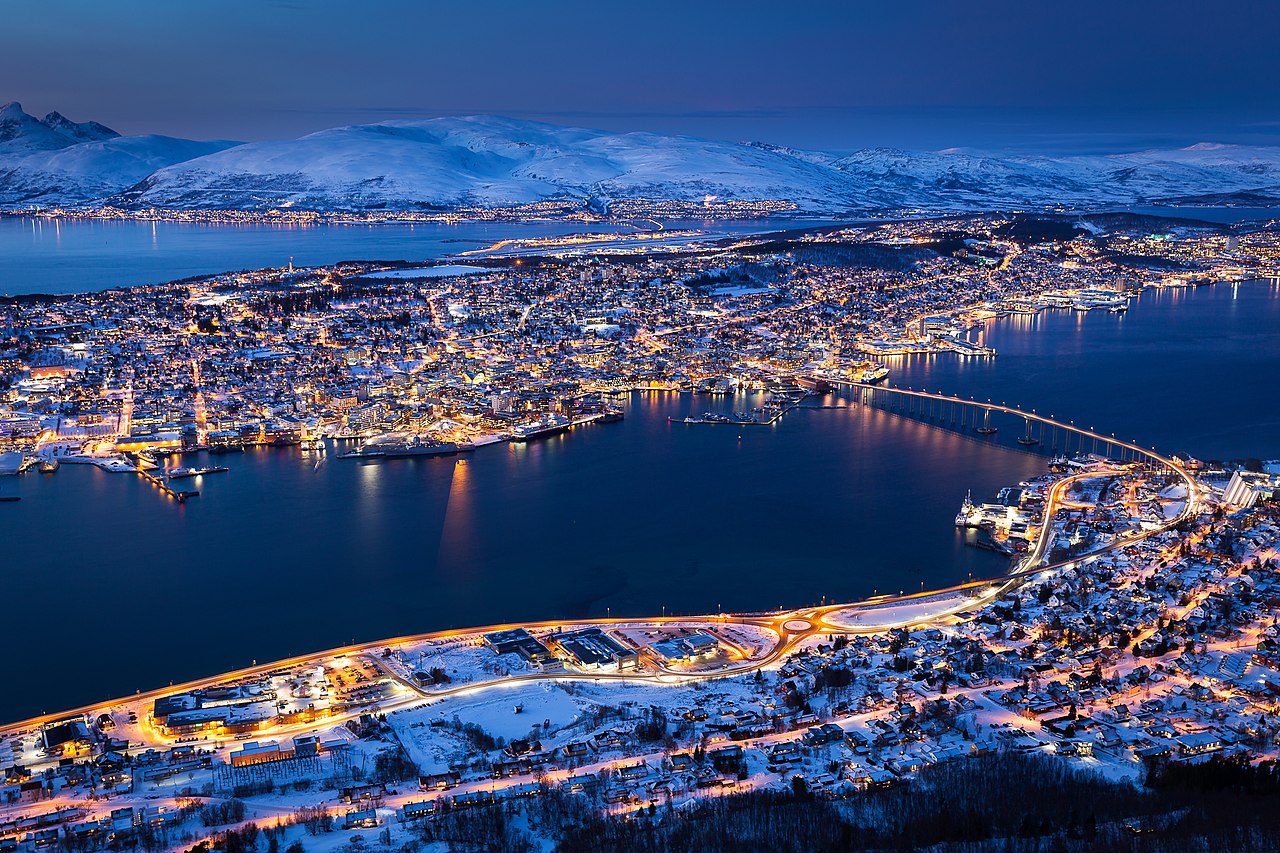
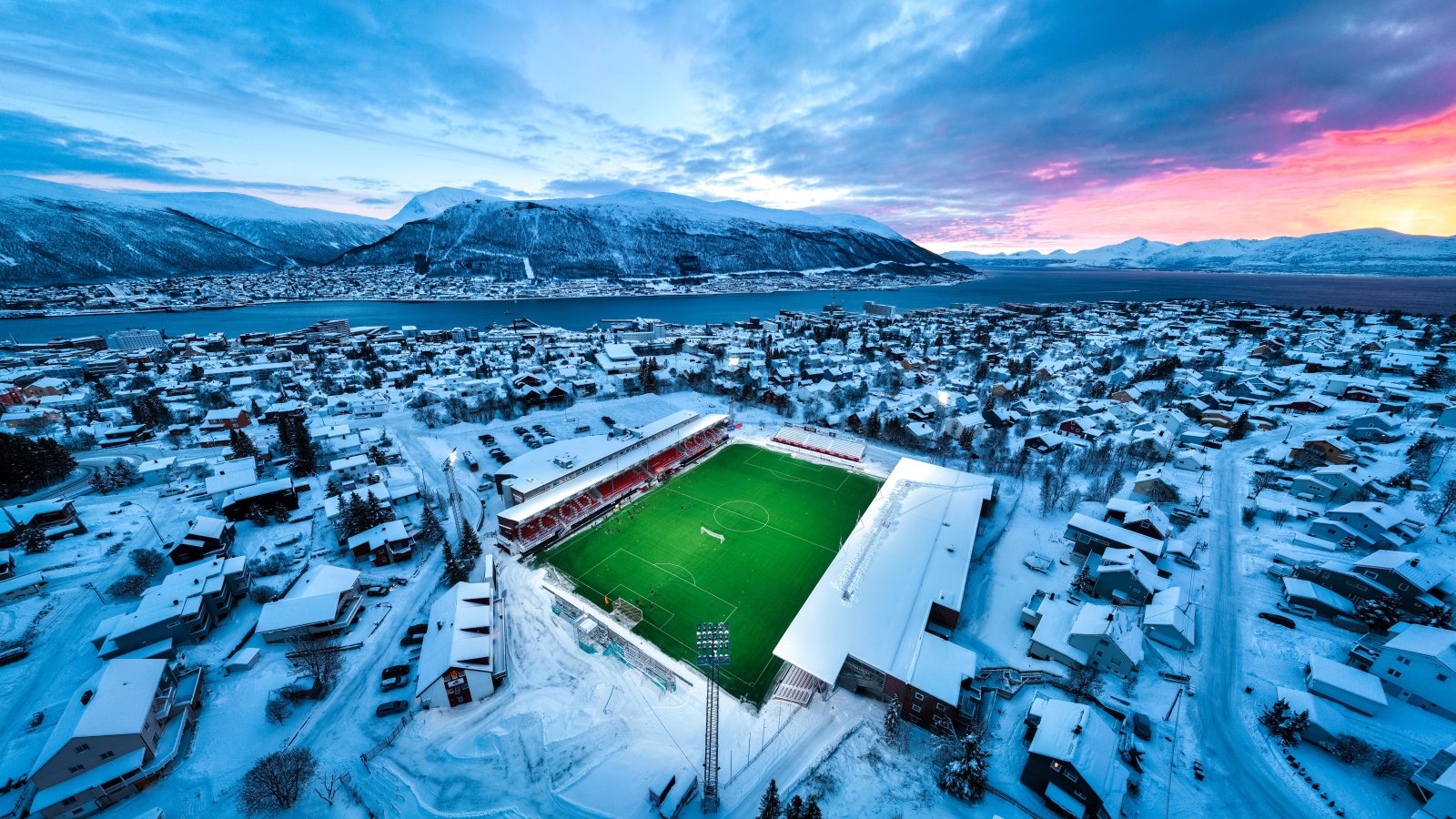
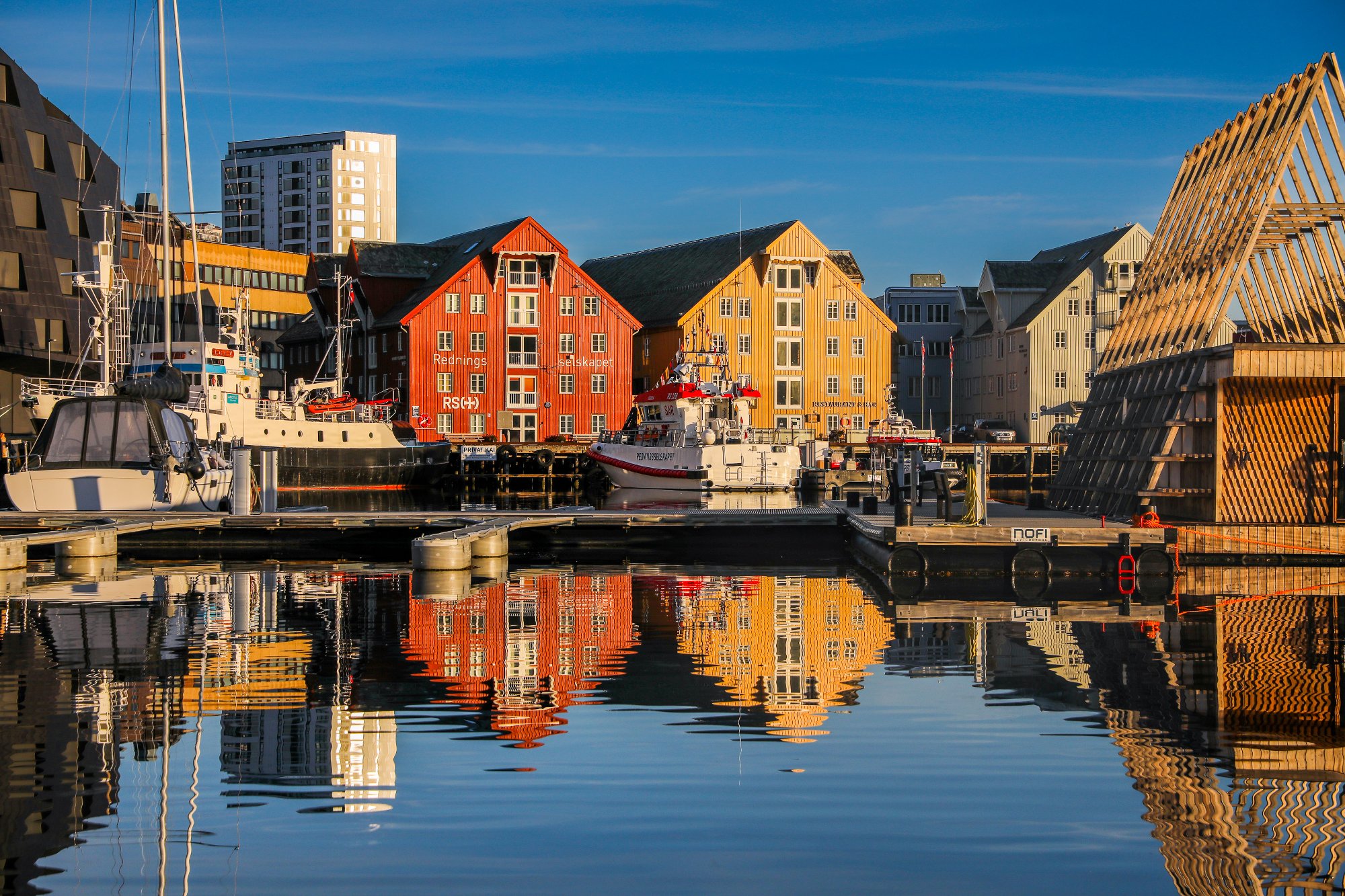
Northern Norway, 69° north, and yes, comfortably inside the Arctic Circle. The Circle runs at about 66°34'N; Tromsø sits at 69°39'N, around 350 km inside it. The city is on Tromsøya, an island between the mainland and the open coast, with fjords on both sides and mountains in every direction. It's further north than Reykjavík, further north than most of Alaska, and that latitude is the whole reason the light behaves the way it does. There's more on the seasons in our Tromsø overview.
How big is Tromsø?
About 75,000 people. Small enough to walk from one end of the centre to the other in twenty minutes; big enough for a university, a symphony orchestra, a Michelin-recommended restaurant scene and a football club in the Norwegian top flight. That combination is unusual this far north, and it's most of what makes the city work.
Is Tromsø worth visiting?
If you want the Arctic without giving up hot water and good food, yes. If you're coming purely to tick "northern lights" off a list and you have two nights, be honest with yourself about the odds, and read the aurora section below. The people who leave happiest treat the sky as a bonus and the fjords, the food and the light as the point.
Is Tromsø the best place in Norway for the northern lights?
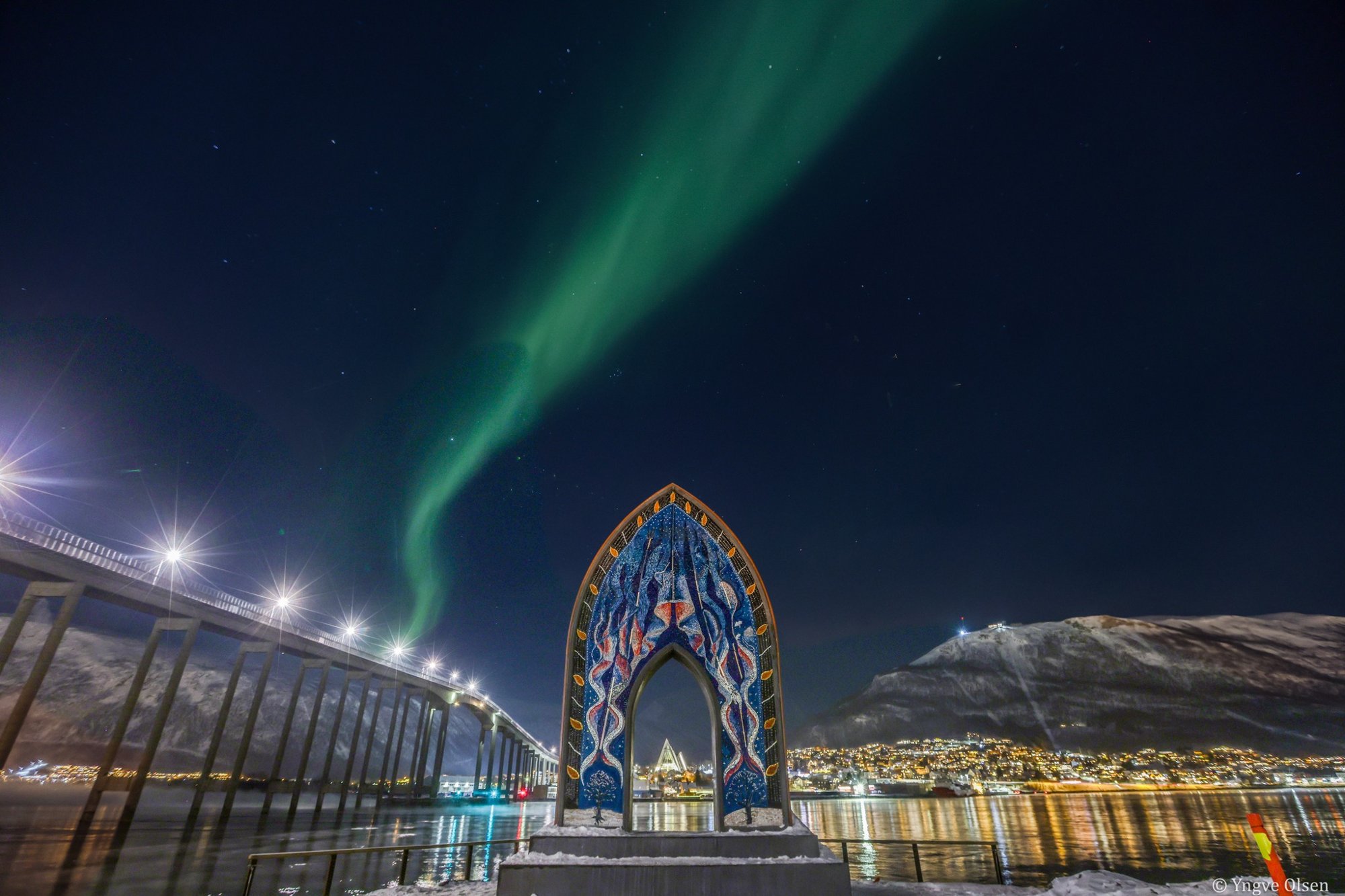
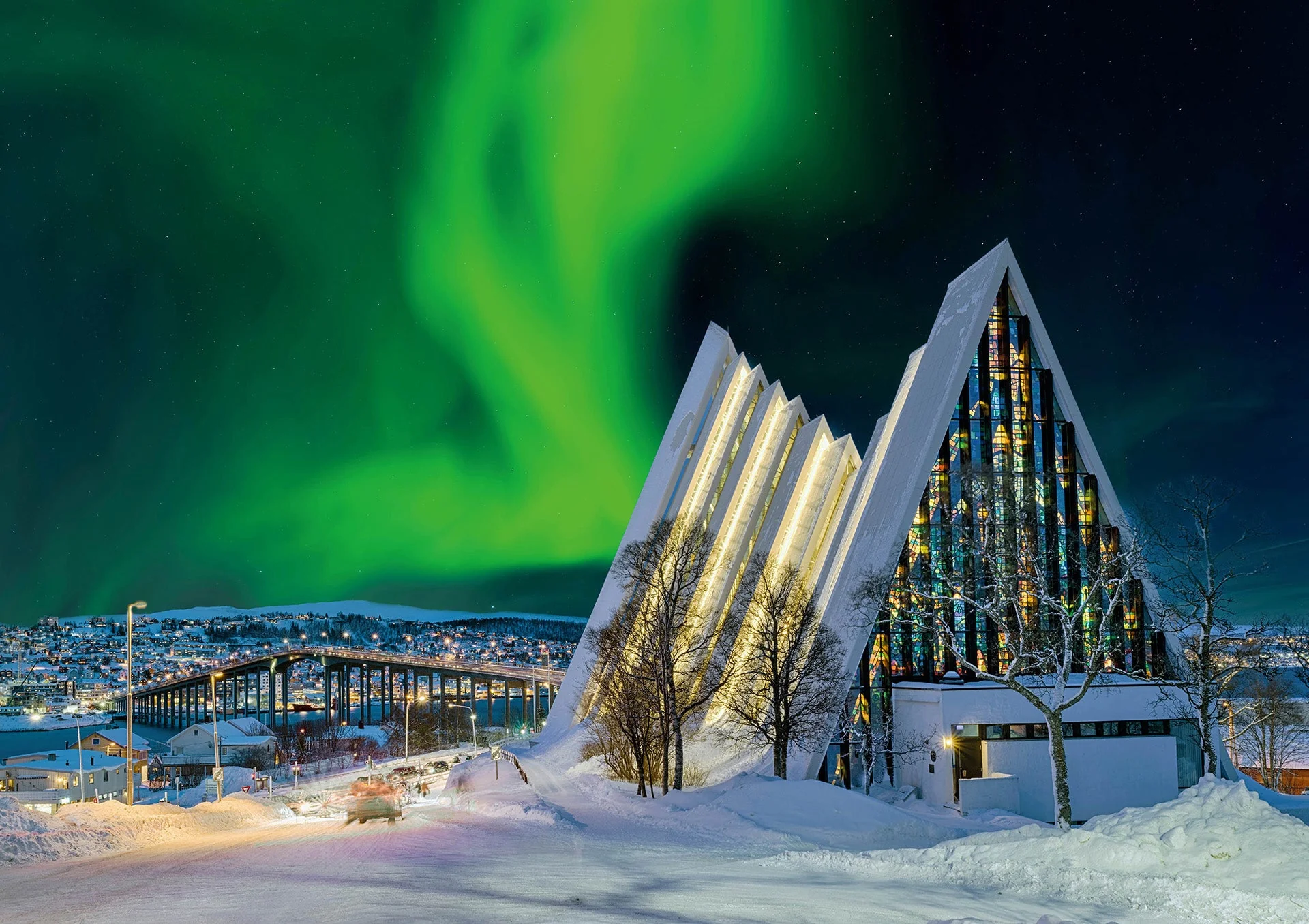
It's the best-positioned city. Tromsø sits under the auroral oval, so on a clear, active night the lights are often directly overhead rather than low on the northern horizon. The trade-off is coastal weather, which means clouds. Places inland like Alta or Karasjok are drier but far harder to reach, with less to do when the sky is grey.
Is Tromsø good for a first trip to Norway?
It's a strange first trip. Tromsø is no more representative of Norway than Venice is of Italy. But it's a direct two-hour flight from Oslo, everything runs in English, and it delivers something Bergen and the southern fjords simply cannot. Many people come for Tromsø and add Oslo on the way through.
How many days do you need in Tromsø?
Four nights is our honest floor if the aurora matters: three viewing nights plus a buffer. Two nights works if you're adding Tromsø to a bigger trip and treating the lights as luck. Five to six lets you take a full day out to the fjords or Senja without the trip becoming a schedule. If you'd rather we arrange the whole thing, that's what our packages are for.
Four different versions of one city
Tromsø has four genuinely different versions of itself. The right month depends entirely on which one you're after.
What's the best time to visit Tromsø?
There isn't one, there are two. For the northern lights, snow and polar night: late September to late March. For the midnight sun, hiking and fjord water: late May to late July. April and August are the in-between months, neither dark enough nor bright enough, but quieter and cheaper.
When can you see the northern lights in Tromsø?
The season runs roughly September to March. The aurora is active year-round, but you can only see it when the sky is dark, and from late May to late July it never gets dark here. Peak months are usually November through February: longest darkness, most viewing hours per night. Our full Northern Lights guide goes deeper.
What is the polar night in Tromsø?
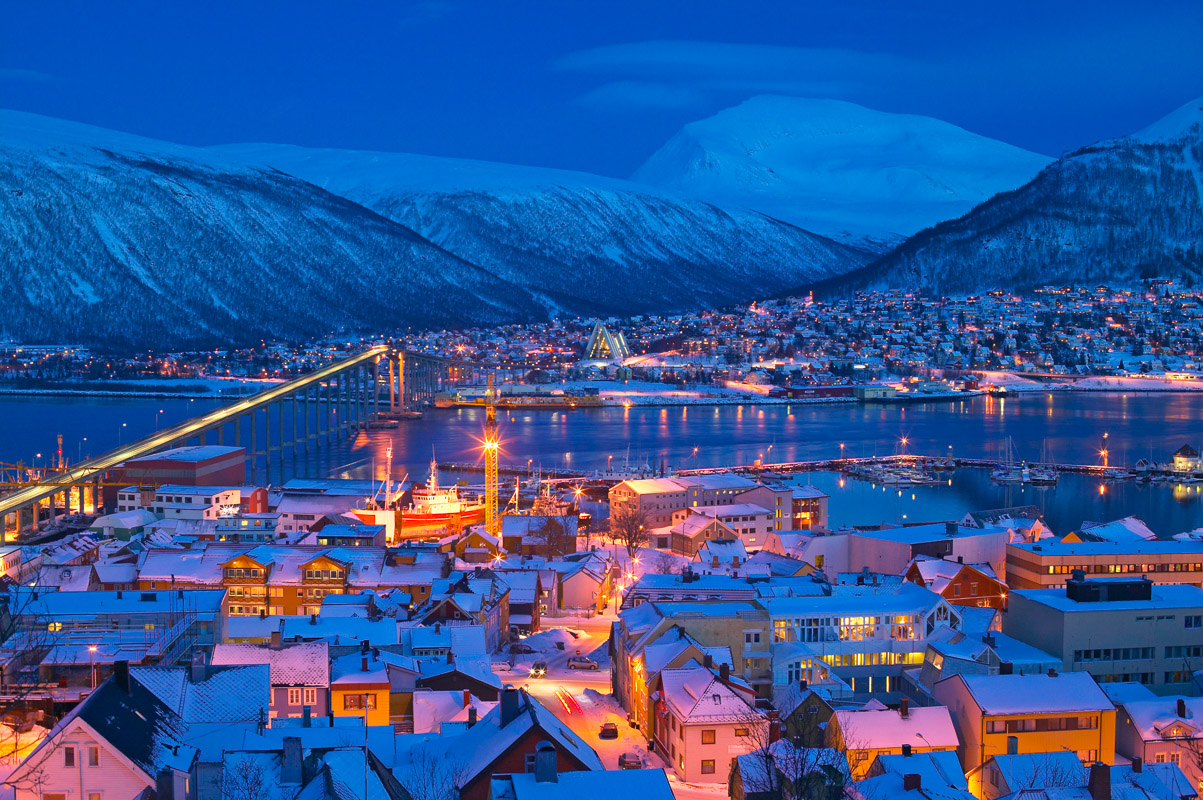
From roughly late November to mid-January, the sun doesn't rise above the horizon. It isn't black. For several hours around midday the sky turns a long, saturated blue, the mørketid, and the snow reads navy and rose. Most locals will tell you it's the most beautiful time of year. Some find it heavy. Both are true. More in Tromsø in winter.
When is the midnight sun in Tromsø?
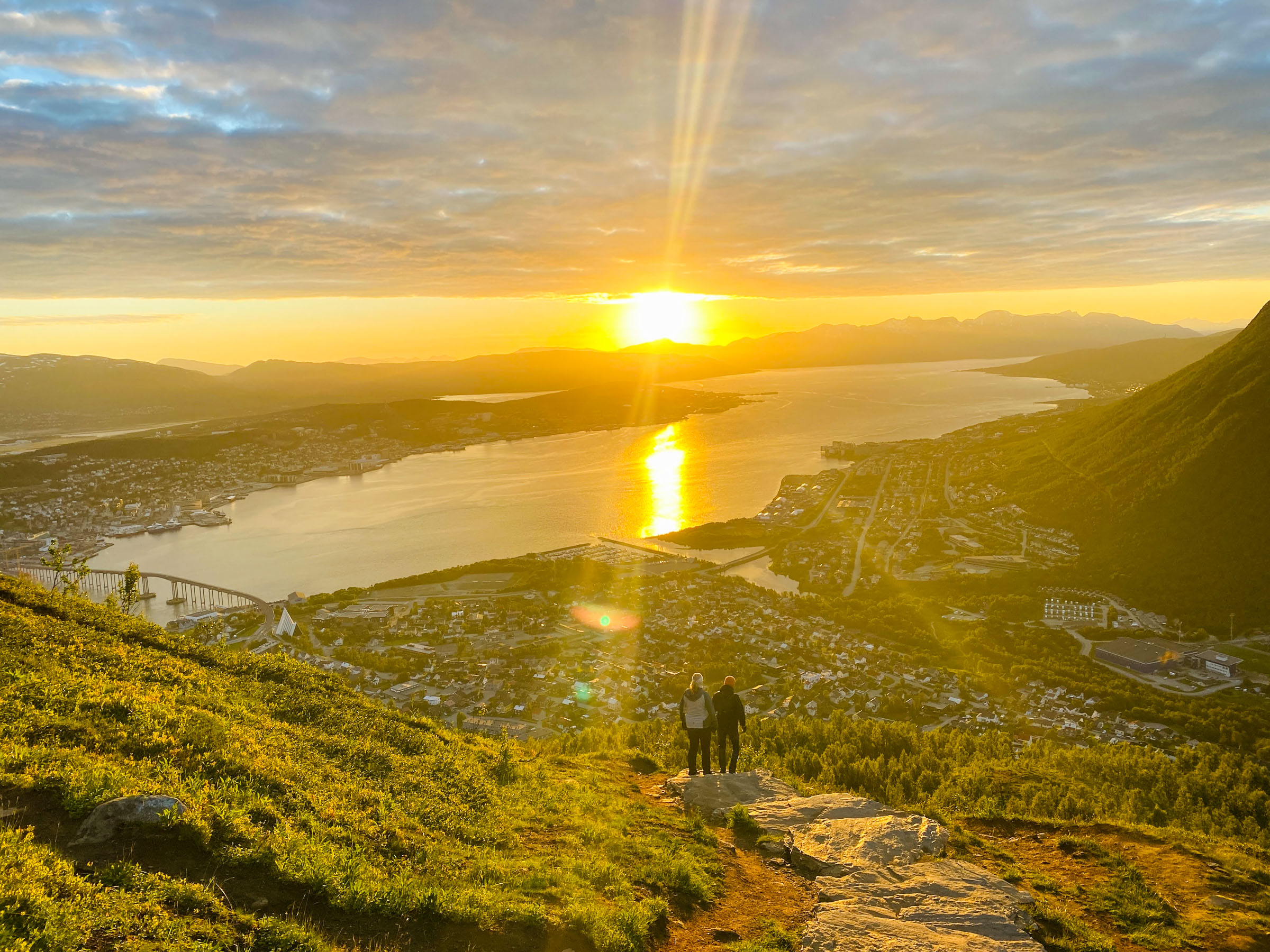
Roughly 20 May to 22 July, the sun stays above the horizon for 24 hours. It doesn't hover overhead; it swings low across the north around midnight and climbs again. Golden hour lasts about six hours. People go hiking at 11pm because it makes sense to.
What's Tromsø like in December?
Deep in the polar night: spectacular blue light, deep snow, and the best aurora odds of the year. Christmas and New Year are the most expensive and most booked week in the city; if you want them, book six to nine months out. The same conditions exist in late January at a fraction of the price and with the crowds gone.
What's the quietest, cheapest time to visit?
Late April to mid-May, then late August into September, and October. All sit between the two demand peaks. October is the sleeper: the aurora season has already started, autumn colour is on the mountainsides, the snow hasn't arrived, and the city is half as busy as it will be six weeks later.
The section everyone reads first
We've kept it honest rather than encouraging. You can find encouraging anywhere, and it won't help you plan.
Will I see the northern lights in Tromsø?
Nobody can promise you will, and anyone who does is selling something. Two things have to happen at once: enough solar activity, and a hole in the clouds. Over three or four clear-ish winter nights with a guide who's willing to drive, your odds are good. Over one night, they're a coin flip.
How many nights do I need for a fair chance?
Three nights of chasing is our answer, four if the trip is built around the aurora. One clouded-out night is normal. Two in a row happens. Three in a row is bad luck but it happens, and it's exactly why we don't build a two-night aurora trip and call it a good idea.
Do I need a northern lights tour, or can I just look up?
You can see the aurora from the middle of Tromsø on a strong night; the streetlights wash out the weak ones. The reason to go with a guide isn't access, it's mobility: when the coast is socked in, the difference between seeing nothing and seeing everything is often a two-hour drive inland toward the Finnish border. That call needs someone reading forecasts all day.
What's the KP index, and does it matter?
KP is a 0–9 scale of global geomagnetic activity. At 69°N you're already under the oval, so a KP of 2 or 3 is enough for a good display overhead; you don't need a storm. Chasing a high KP number is mostly a southern-Europe problem. Here, cloud cover is the number that decides your night, not KP.
What does the aurora actually look like?
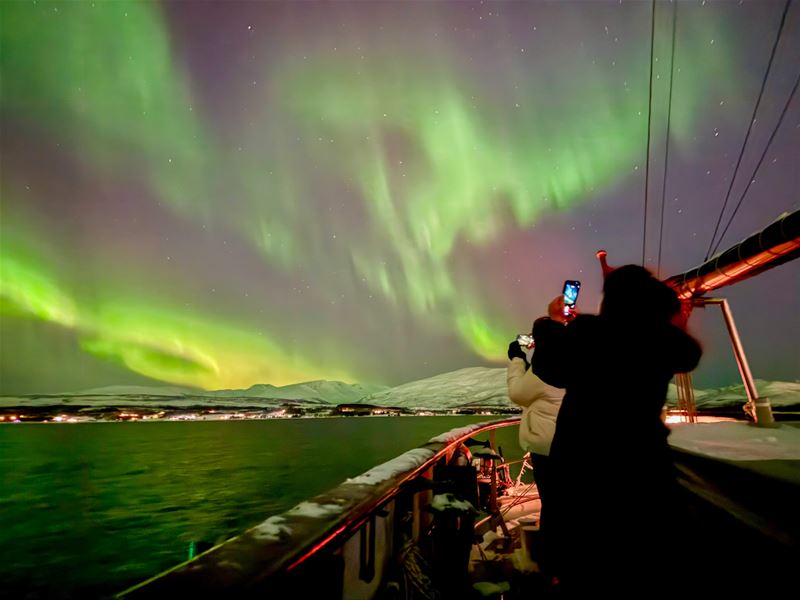
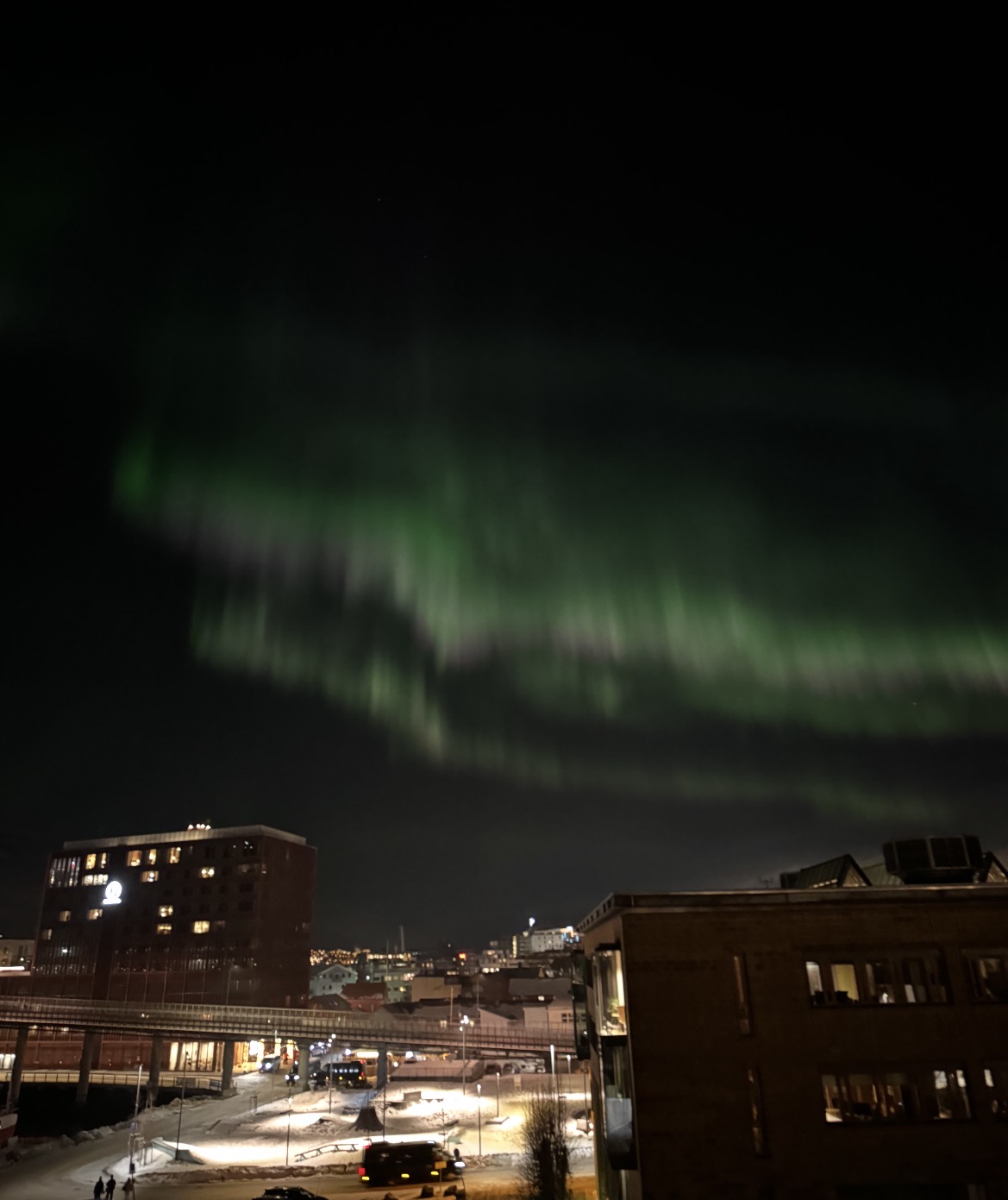
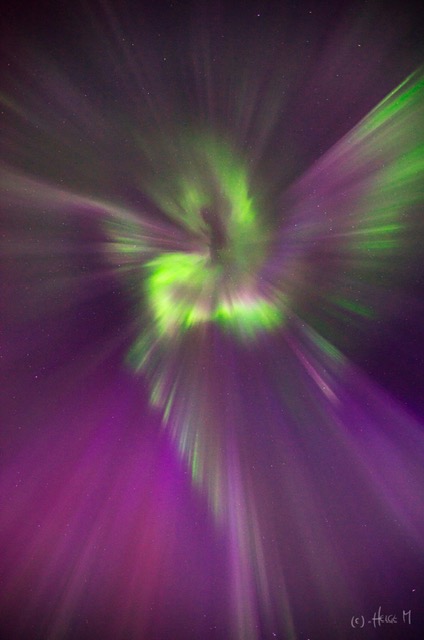
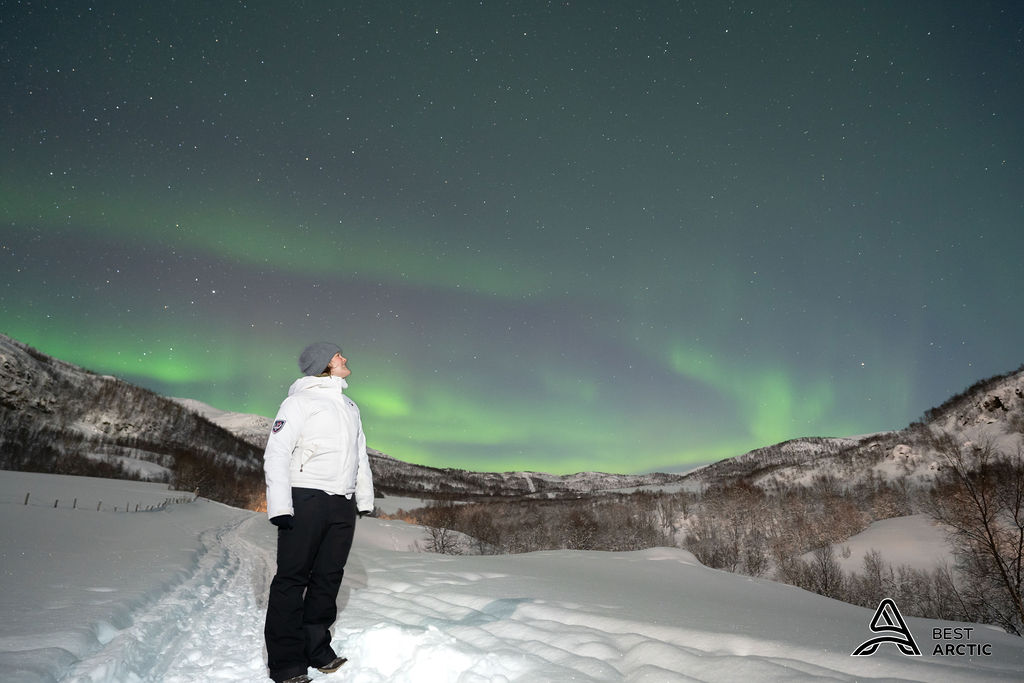
Usually less colourful than the photographs, and far more alive. To the eye a moderate display often reads as a pale grey-green arc, and only the strong ones show pink and purple. Your camera sees more colour than you do because its sensor collects light over seconds. What a camera can't capture is how fast the whole thing moves.
How do I photograph the northern lights?
A long exposure is cheating in the best way: a two-second shot gathers two seconds of photons, while your eye works in real time. Newer phones with a night mode do a surprisingly decent job handheld against something solid. For anything better, use a camera with manual control, a fast wide lens and a tripod, and bring more batteries than you think, because cold drains them fast. One thing worth knowing before you arrive: most published aurora images are saturated in editing, so a genuinely good live display can feel underwhelming if you were expecting the Instagram version.
What aurora forecast should I use?
For real-time solar wind and activity, NOAA's Space Weather Prediction Center is the primary source. For cloud cover, which matters more, use yr.no, run by Norway's Meteorological Institute and NRK. The commercial aurora apps mostly repackage NOAA data with a nicer interface and a worse cloud layer.
Where are the best places to see the aurora near Tromsø?
Anywhere with a dark sky and an open northern horizon works: Kvaløya, Ersfjord, the Lyngen side, or inland along the E8. But the right spot changes nightly with the cloud, which is why a fixed "best location" list is close to useless. The good answer is always: wherever the sky is clear tonight.
Do I need to worry about the moon?
Less than people think. A full moon lifts the ambient light and washes out weak displays, but it also lights the landscape, which usually makes for better photographs. Cloud cover matters an order of magnitude more. Don't reschedule a trip around the lunar calendar.
The half most visitors never consider
The half of Tromsø most visitors never consider, and the half we'd pick if we could only have one. More in the Midnight Sun guide.
What's Tromsø like in summer?
Green, loud and awake. Temperatures usually sit in the low to mid teens, the mountains are walkable, the fjord water is cold enough to hurt and clear enough to swim in anyway, and nobody goes to bed. The city runs on a kind of low-grade insomnia from June to August, and it's the best thing about the place.
How do you sleep when the sun doesn't set?
Blackout curtains, which every hotel here has, plus an eye mask if you're sensitive. The harder part isn't the light through the window, it's that your body stops producing the signal to stop. Most visitors sleep badly for the first two nights and then adjust. Locals mostly give up and sleep less until August.
Is it warm enough to do things outdoors in summer?
Yes, with the caveat that "warm" here means a fleece in the evening. Summer days are comfortable for hiking, kayaking and sitting outside a café. The weather changes fast and the wind off the water is cold even in July, so the layer system matters in summer too, just with fewer layers.
Midnight sun or northern lights, which is better?
Different trips entirely. The aurora is a gamble with a spectacular payout. The midnight sun is a guarantee: the sun is there whether the sky is clear or not, and the light changes how a whole city behaves. If you hate uncertainty, come in summer. If you want the thing you can't schedule, come in winter.
Are the whales here in summer?
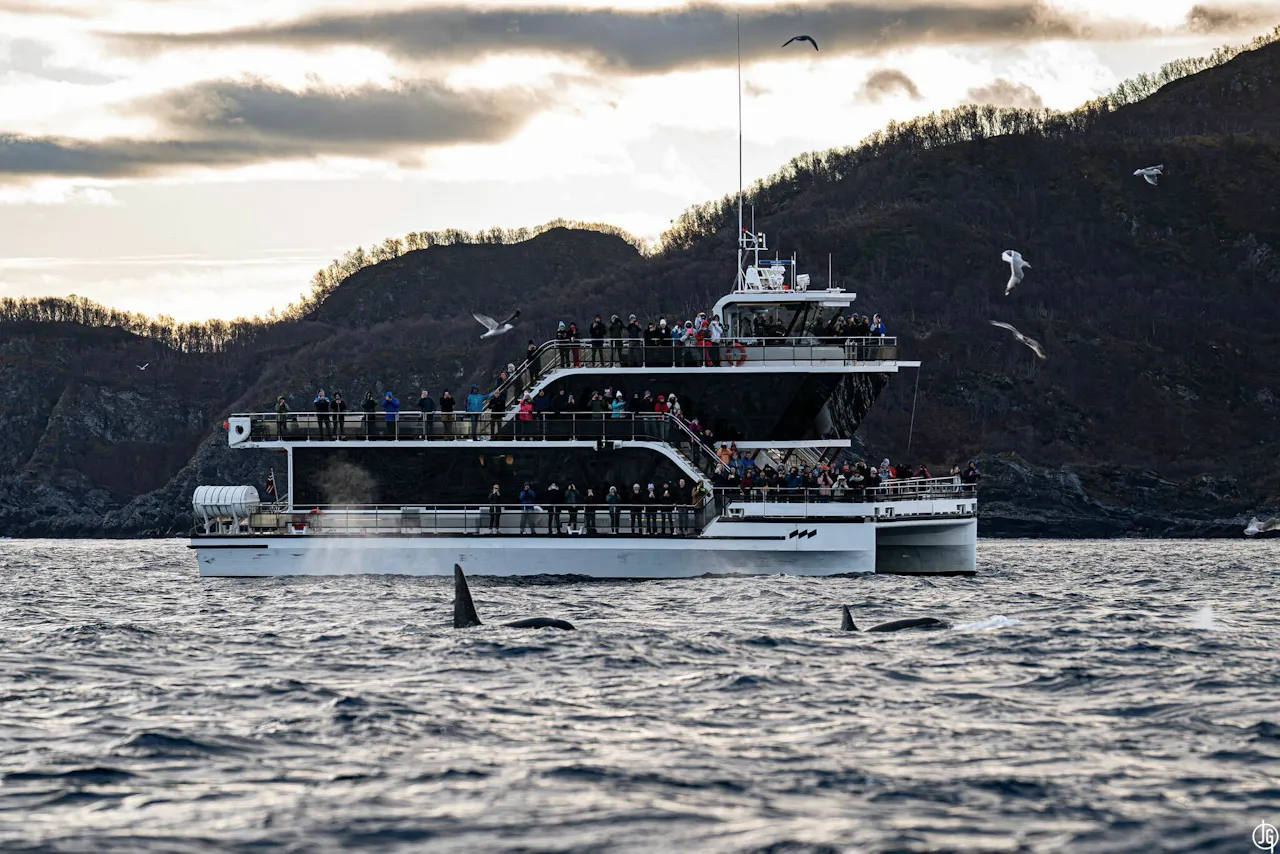
No. The whale season in the fjords around Tromsø runs roughly November to January, when the herring come in and the humpbacks and orcas follow them. Summer has sea eagles, porpoises and seabirds, and the fjord cruises are about the landscape rather than the wildlife. If whales are the reason you're coming, come in winter.
The section that quietly saves trips
Nobody has a bad time in Tromsø because of the cold. They have a bad time because of cotton.
How cold does Tromsø actually get?
Less cold than the latitude suggests. The Gulf Stream keeps the coast mild: midwinter days typically run around −4°C to −6°C, and it's the wind off the water rather than the number that makes it bite. Inland, an hour away, it can be −20°C on the same night. Summer sits around 12–15°C.
What should I wear in Tromsø in winter?
Three layers, and none of them cotton. A merino wool base layer against the skin, a fleece or down mid-layer, and a windproof, waterproof outer shell. Then: wool socks, insulated waterproof boots with real grip, a hat that covers your ears, and mittens over gloves. Cotton holds sweat, sweat freezes, and that's how people get cold.
Do I need to buy winter gear, or can I rent it?
Most winter activity operators here supply a thermal oversuit, boots, hat and mittens for the duration of the tour; you wear your own layers underneath. What you need to own is the base layer and the socks. Ask before you buy anything expensive; you may only need a good set of wool underwear.
Are the roads and pavements icy?
Yes, from roughly November to April, and Tromsø is built on a hill. Locals wear studded overshoes or boots with metal spikes. You can buy them in any sports shop in the centre for a few hundred kroner, and they're the single best purchase most visitors make. Falls on ice are the most common way trips get ruined here.
Will bad weather cancel my activities?
Sometimes, and it should. Boats don't sail in certain sea states, and no responsible operator drives a snowmobile in a whiteout. Weather cancellations are refunded or rebooked. If an operator never cancels anything, that's a warning sign rather than a selling point.
Do I need a swimsuit?
More often than you'd expect. Arctic sauna, hot tubs on deck, and the sea-swim-then-sauna habit that locals treat as normal are all part of the winter here. Pack one. It weighs nothing and you will feel silly borrowing one.
Closer than it looks on a map
Tromsø is a great deal closer than it looks on a map. Two hours from Oslo, gate to gate.
How do I get to Tromsø?
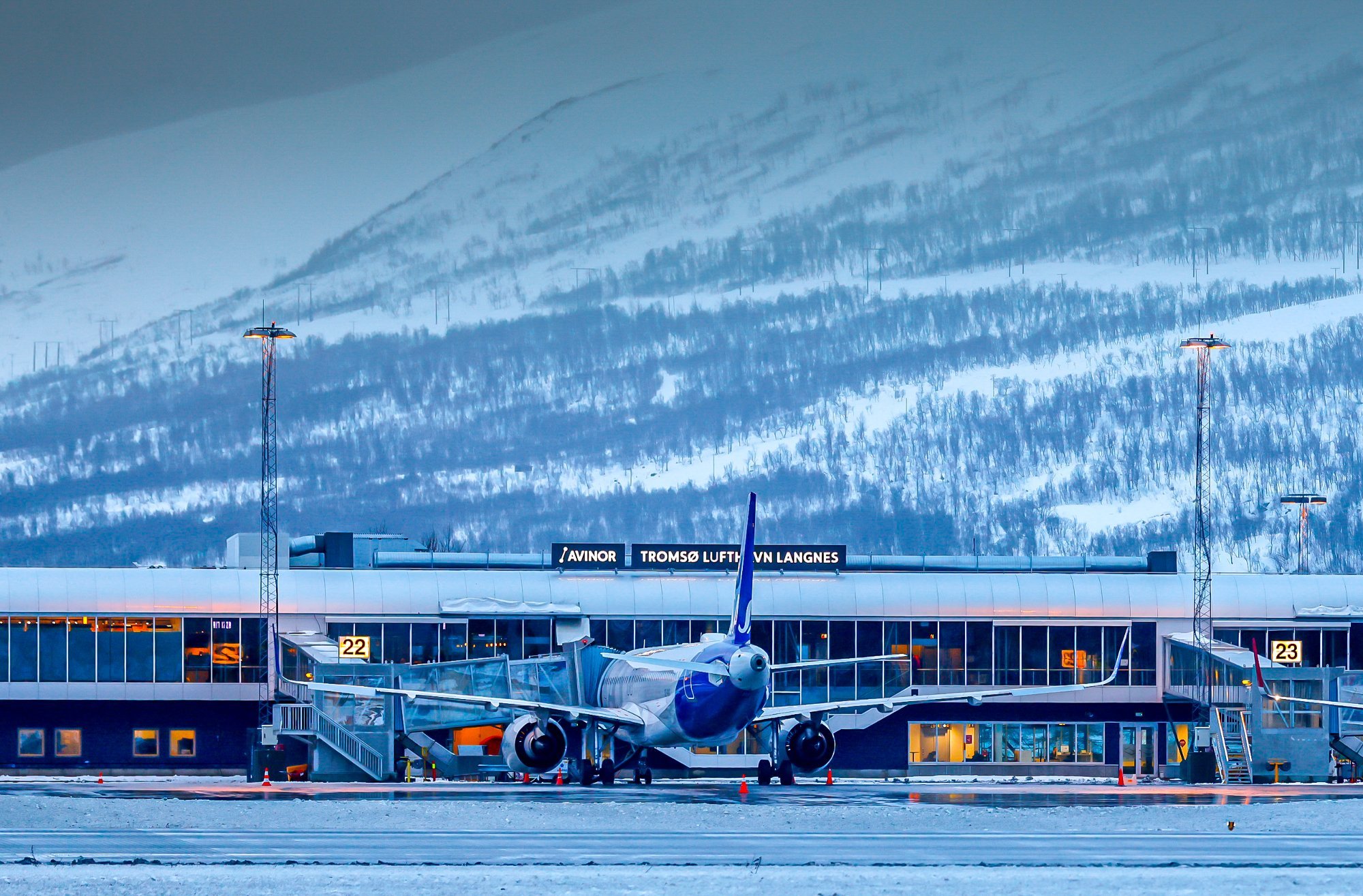
By air, essentially. Tromsø Airport (TOS) sits on the western side of the island with frequent domestic flights from Oslo, under two hours, and seasonal direct routes from London, Frankfurt, Munich, Amsterdam and Helsinki, among others. Avinor publishes the live route list. There are also long-distance buses and the Hurtigruten coastal ship, both of which take a day or more.
Are there direct flights from the UK or Europe?
Seasonally, yes, and the list changes every year as routes get added and dropped based on demand. Check Avinor's own departures page rather than a travel blog's list, which is usually a year out of date. If nothing direct fits your dates, connecting via Oslo adds about three hours door to door.
How do I get from Tromsø Airport to the city centre?
It's about a ten-minute drive. There's a Flybussen airport express that runs to the main hotels, a regular city bus, and a taxi rank. Taxis are expensive by most standards, around 250–350 NOK for the trip. Every HD Arctic package and concierge trip includes the transfer, so this is a question you only need to answer if you're arranging your own stay.
Do I need a rental car in Tromsø?
Almost never. The city centre is walkable, activity operators pick up at the hotels, and driving here in winter means studded tyres, mountain passes and Arctic darkness on unfamiliar roads. Rent a car if you're set on chasing the aurora yourself and you've driven on ice before. Otherwise it's an expensive way to add stress.
Is Tromsø walkable?
The centre is, comfortably. From the harbour to the cathedral to Storgata is a fifteen-minute walk, and most hotels sit inside that triangle. The hill is real, though: the city climbs steeply away from the water, and in February that hill is a sheet of ice. See the question about spikes above.
Can I get to Lofoten or Senja from Tromsø?
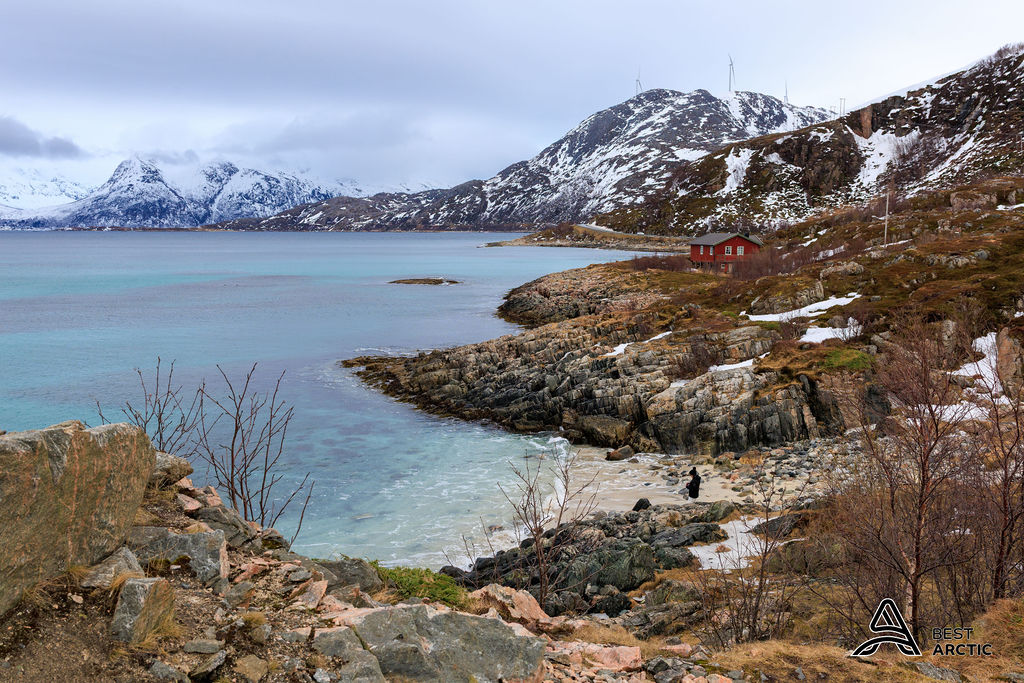
Senja, yes; it's a long but very good day trip by road, or better as an overnight. Lofoten is further than the map suggests: five to six hours' drive each way, or a flight via Bodø. Doing Lofoten as a day trip from Tromsø is technically possible and almost always a mistake.
Is Tromsø safe?
Very. The genuine risks here are environmental rather than criminal: ice underfoot, cold if you're underdressed, weather that changes faster than you expect, and avalanche terrain in the mountains that looks benign from the road. Go with guides for anything off the beaten path in winter, and check varsom.no if you're heading into the backcountry yourself.
What "expensive" actually means
Norway is expensive. Here's what that actually means in numbers, plus the small practical things people ask us most.
Is Tromsø expensive?
Yes, and pretending otherwise helps nobody. A beer runs around 100–120 NOK, a main course at a mid-range restaurant 250–400 NOK, and a guided activity 1,000–2,500 NOK per person. The saving grace is that the expensive things are genuinely good; Norway doesn't really do the cheap-and-bad tier that other destinations use to pad the budget.
Do I need cash in Norway?
No. Norway is close to cashless: card works everywhere, including buses, market stalls and the ferry. Bring a card with no foreign transaction fee and skip the currency exchange entirely.
Do I tip in Norway?
Not as an obligation. Service staff are paid a real wage and nobody depends on tips to make rent. Rounding up or leaving five to ten percent after a good dinner is normal and appreciated; leaving nothing is not an insult. Never tip a guide out of guilt.
Do I need a visa for Norway?
Depends on your passport. Norway is in the Schengen area but not the EU. Most Western passports get 90 days visa-free; the EU's ETIAS authorisation applies to visa-exempt travellers when it comes into force. Check the Norwegian government's own pages for your nationality; this is one thing you shouldn't take from a travel website, including ours.
Will my phone work? Is there WiFi?
Yes and yes. Mobile coverage across Tromsø and most of the surrounding fjords is good, and free WiFi is standard in hotels, cafés and on many buses. Coverage does drop out in the mountains and on the far side of some fjords, worth knowing if you're driving yourself and relying on a phone for navigation.
What's the tap water like?
Excellent, and free. Buying bottled water in Norway is one of the few ways to spend money on nothing at all. Bring a reusable bottle.
Do people speak English in Norway?
Effectively everyone under seventy, and fluently. You will not need a word of Norwegian to get through a trip here. Learning takk costs nothing and is always well received.
What's actually worth your time
What there is to actually do, what's worth your time, and the questions about Sami culture we're asked most.
What are the best things to do in Tromsø?
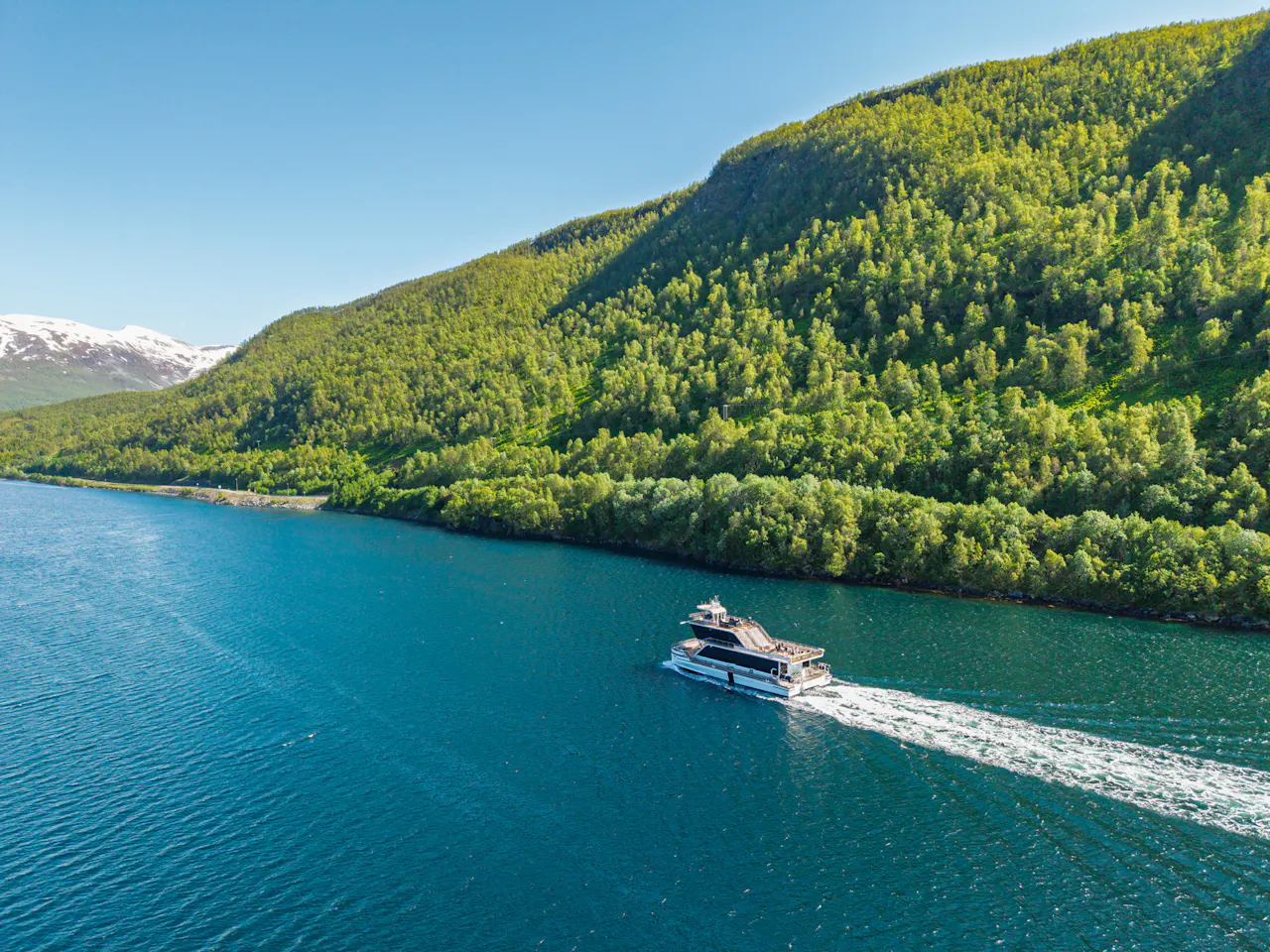
In winter: an aurora chase, a whale safari if you're here November to January, dog sledding, and the cable car up to Storsteinen on a clear evening. In summer: a fjord cruise, kayaking around Sommarøy, and a hike. Year-round: Polaria, the Arctic Cathedral, and eating well. The list is short because most of it is genuinely good. You can book any of these on their own, or as part of a package.
Is the Fjellheisen cable car worth it?
On a clear day, yes: it's four minutes to 421 m and a view down the whole island and across to the Lyngen Alps. In cloud, you're paying to stand in fog. Check the webcam before you go up. It's also a legitimate aurora viewpoint on a good night, and it stays open late in winter for exactly that reason.
Is Tromsø good for food?
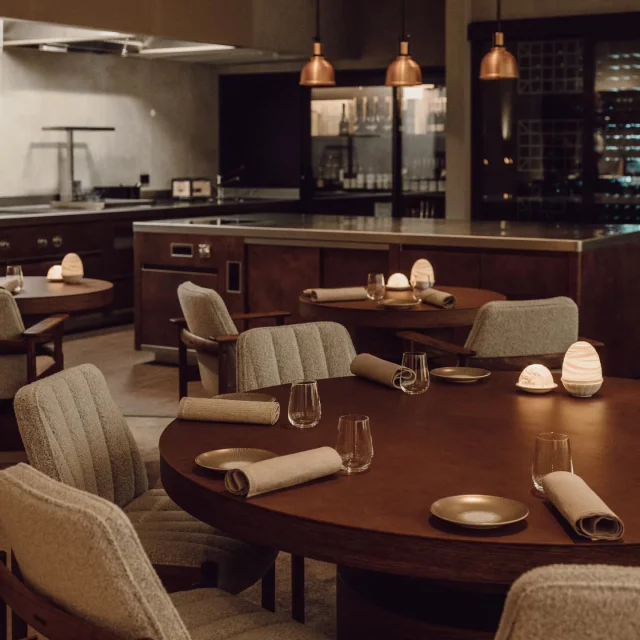
Better than it has any right to be. The city has a fine-dining scene, world-class seafood coming off boats a few hundred metres away, a strong café culture, and Mack, the world's northernmost brewery. Book the good restaurants ahead; there are not many tables in a city this size, and in high season they go weeks in advance.
Should I eat reindeer or whale?
Reindeer is a staple of Northern Norwegian cooking and eating it is unremarkable here. Whale is legal in Norway, served in some restaurants, and a decision most visitors have feelings about; we'd rather you make that call informed than be nudged either way. Neither is a test you have to pass.
Can I visit a Sami reindeer camp?
Yes, and it's worth thinking about how. Reindeer herding is a working profession in Northern Norway, practised primarily by Sami families, not a heritage display. The experiences worth your time are the ones owned and run by Sami families themselves, where you're a guest in someone's business. Ask who owns the operation before you book. It's a fair question and a good operator will answer it plainly.
Is it OK to photograph people at a Sami experience?
Ask first, every time, the same courtesy you'd extend anywhere else, which visitors here sometimes forget. Reindeer, landscape and gear are generally fine. People, and anything ceremonial, are not yours to take without a yes. If you're unsure, the host will tell you.
Can I go dog sledding if I've never done it?
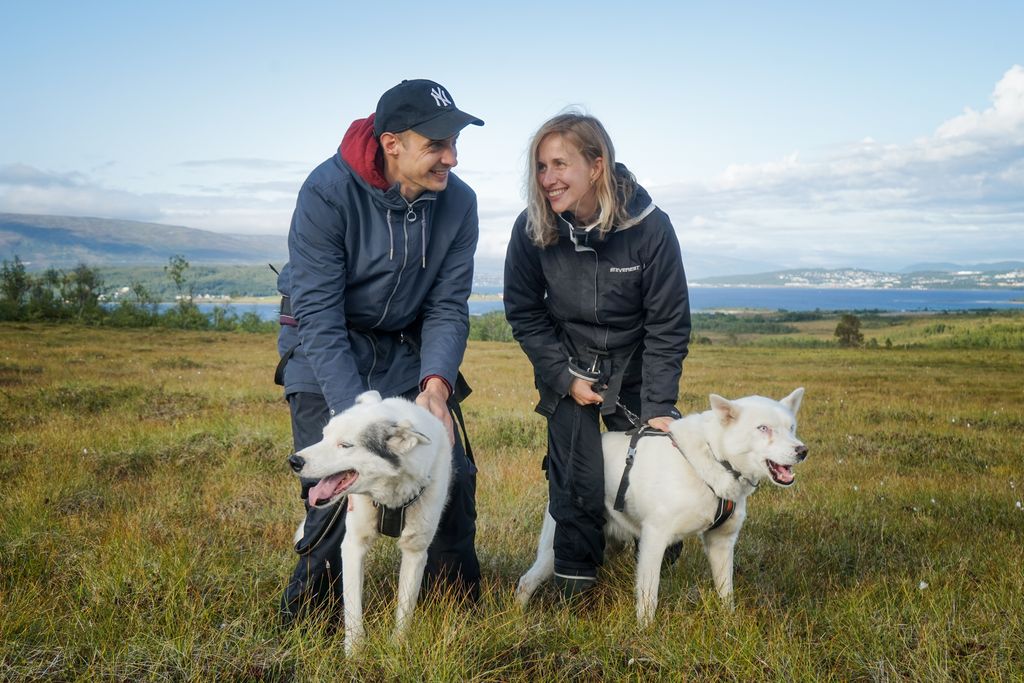
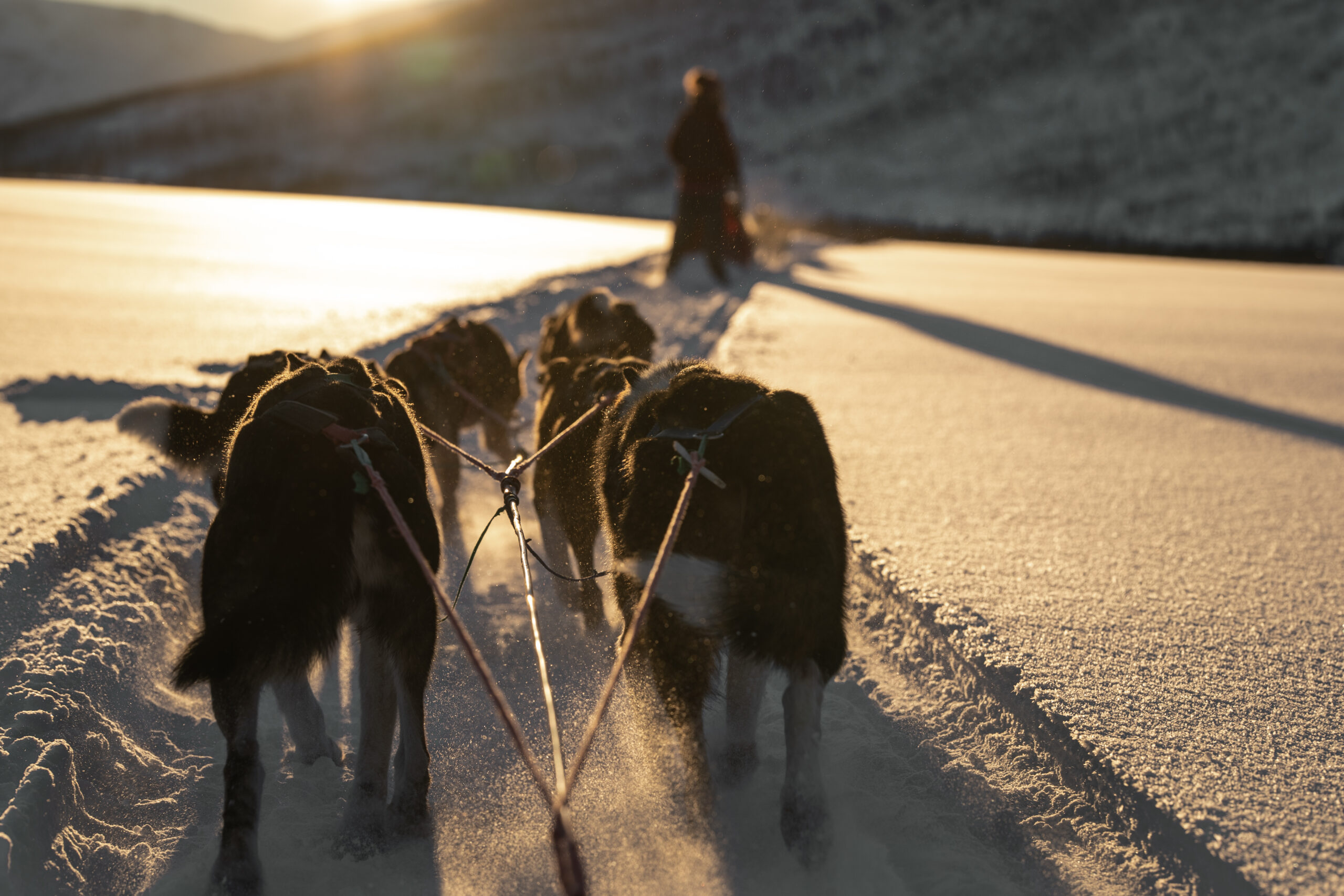
Yes; most operations run beginner-friendly trails and you'll be shown the brake before anything else. You can drive your own team or ride in the sled if you'd rather watch. Worth asking any operator about the kennel: how many dogs, how they're housed, what happens to them when they stop running. Good operators answer immediately.
How we work
How we work, and the questions people send to our inbox before they're ready to book anything.
What does HD Arctic actually do?
We arrange the Tromsø part of your trip as one thing instead of eight: hotel, activities, transfers and timing, booked and sequenced together. Havellen & Dahl AS, two founders born here. You can take a package as it stands, book a single activity on its own, or hand us a blank page and let us build the trip around it.
What's included in a package?
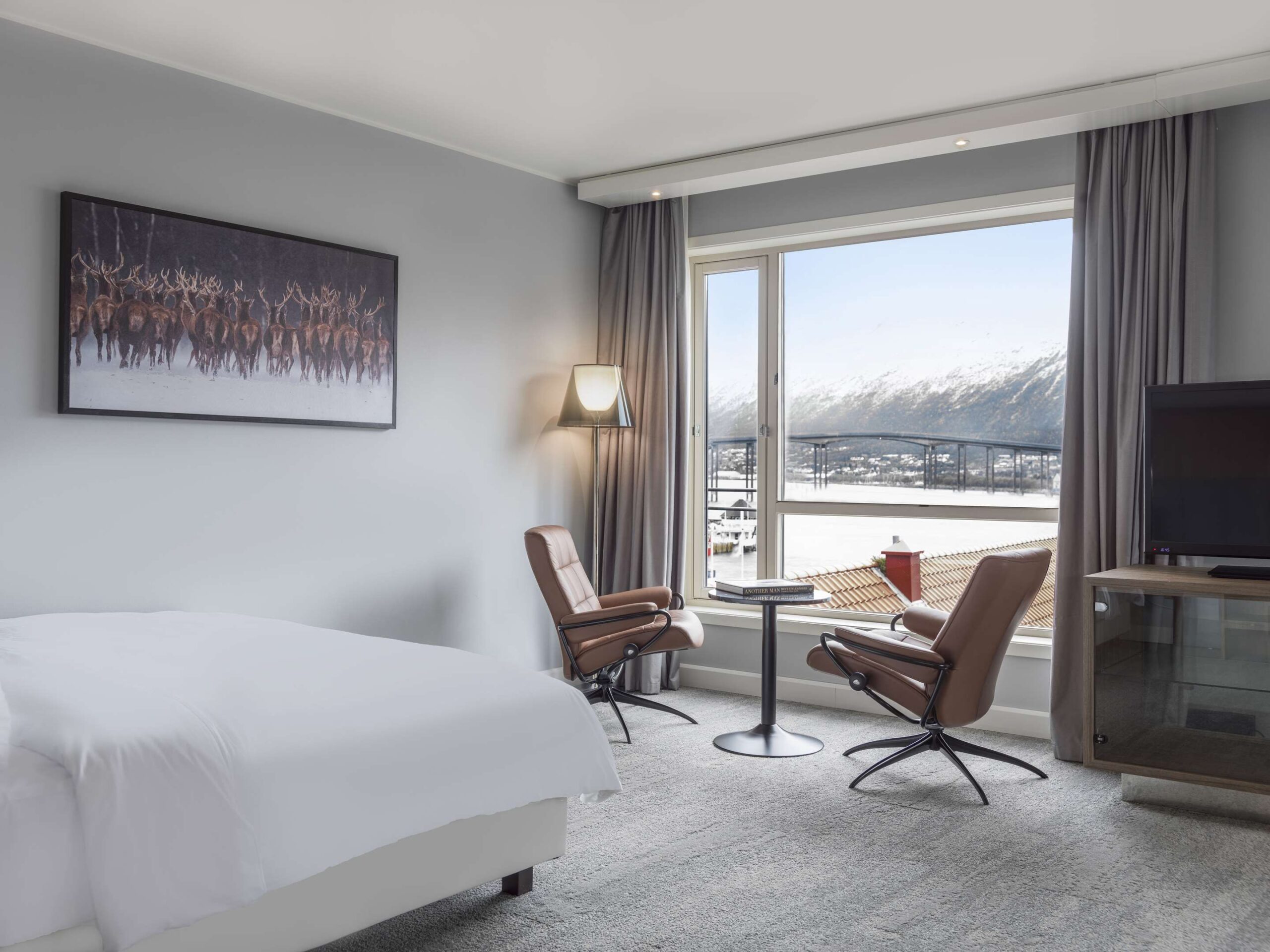
Accommodation at a four-star hotel in the city centre, your activities, all transfers including the airport, and support throughout. One price, one invoice. Our packages run from four to six days across winter and summer; the differences are which activities, and how many days you choose yourself.
Do I have to book a package?
No. Every activity we sell can be booked on its own, and our Concierge works whether you've booked a hotel with us or you're staying somewhere else entirely. Plenty of people book a hotel independently and use us for the parts that are hard to arrange from abroad: the tables, the transfers, the timing.
Who runs the activities?
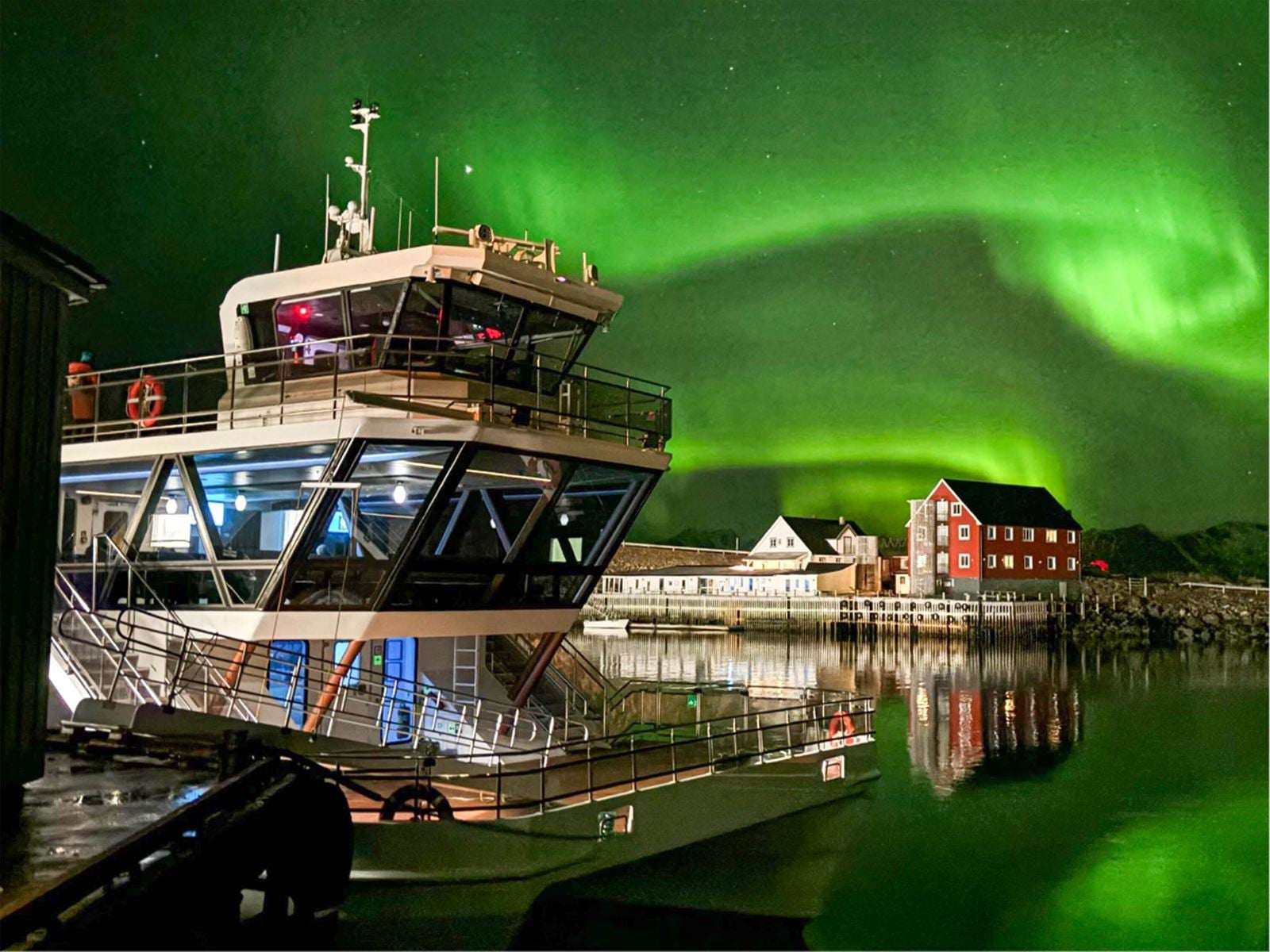
Every experience we sell is operated by our exclusive local activity partner: aurora chases, whale watching, dog sledding, snowmobile, Sami visits, fjord cruises, ice fishing. They run the largest hybrid-electric fleet in Norway and have been working this coast long enough to know which way to drive on a marginal night. You can read about who we work with on our partners page.
Can you cancel or move my booking?
Our Flex rate allows free cancellation up to 21 days before arrival, and 80% back after that; date changes are free until the 21-day mark. The Pre-paid rate saves 15% in exchange for fixed dates and no refund, though we'll always try to move a booking when life happens. Individual weather-cancelled activities are refunded or rebooked regardless of rate.
What if I'm travelling with a group?
Up to four guests, use Concierge. Five or more, use Groups; the logistics are different enough to warrant a different conversation, particularly when the group has mixed ages and mixed appetites for a 1am hot tub. Companies sending eight or more should look at Incentive.
How quickly do you reply?
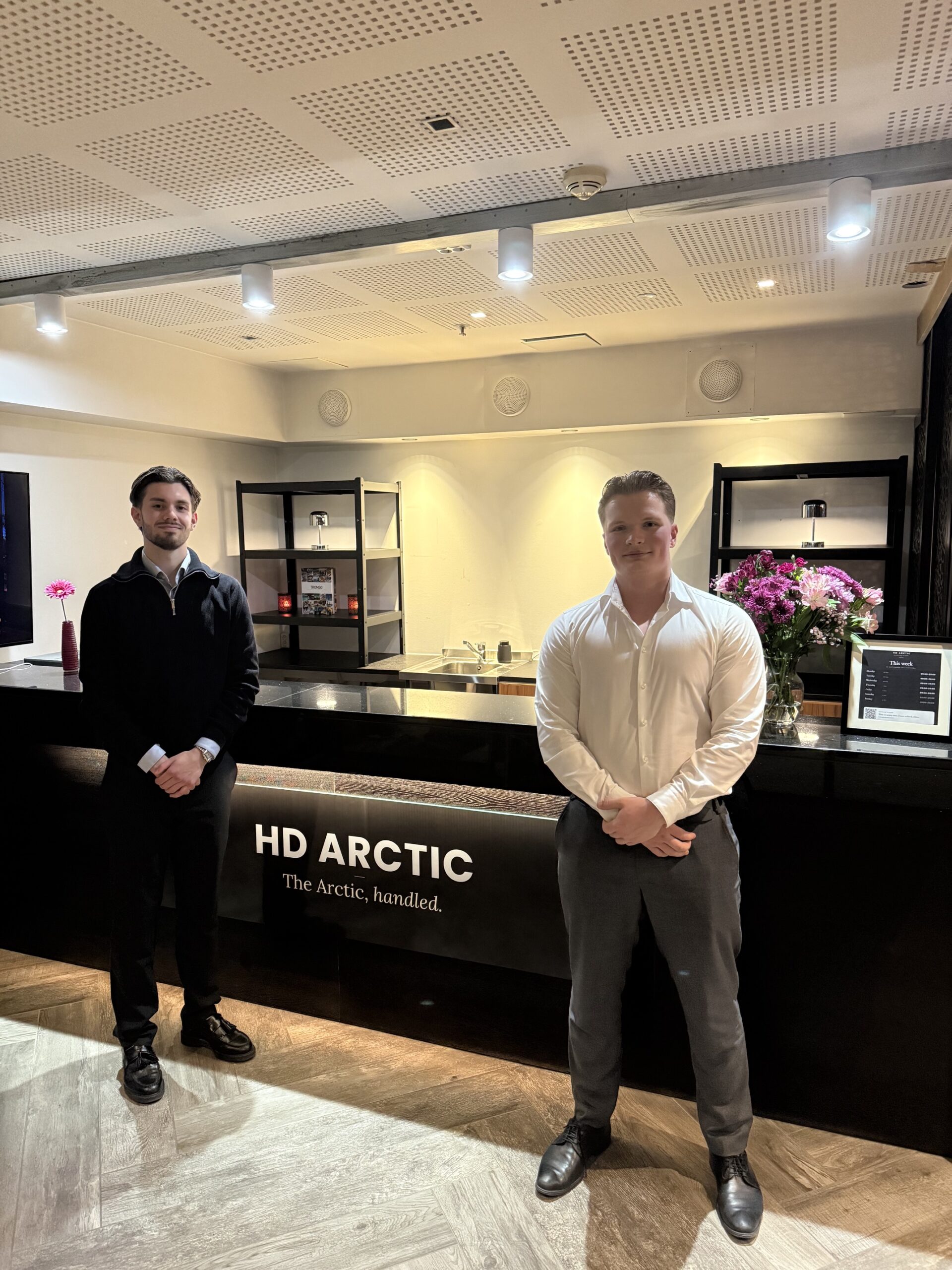
Within 24 hours, to every enquiry, from one of us rather than a queue. Write to hello@hdarctic.com for anything, or directly to William or Erlend if you already know whose desk it belongs on.
What's the one thing you'd tell someone planning this trip?
Give yourself one more night than you think you need. Every regret we hear about Tromsø is a version of the same one: the sky cleared the day after they flew home.
If it isn't here,
it's a good question.
Write to us. It lands on William's or Erlend's desk, and we answer everything within 24 hours, whether or not you ever book a thing.
hello@hdarctic.com